Overview
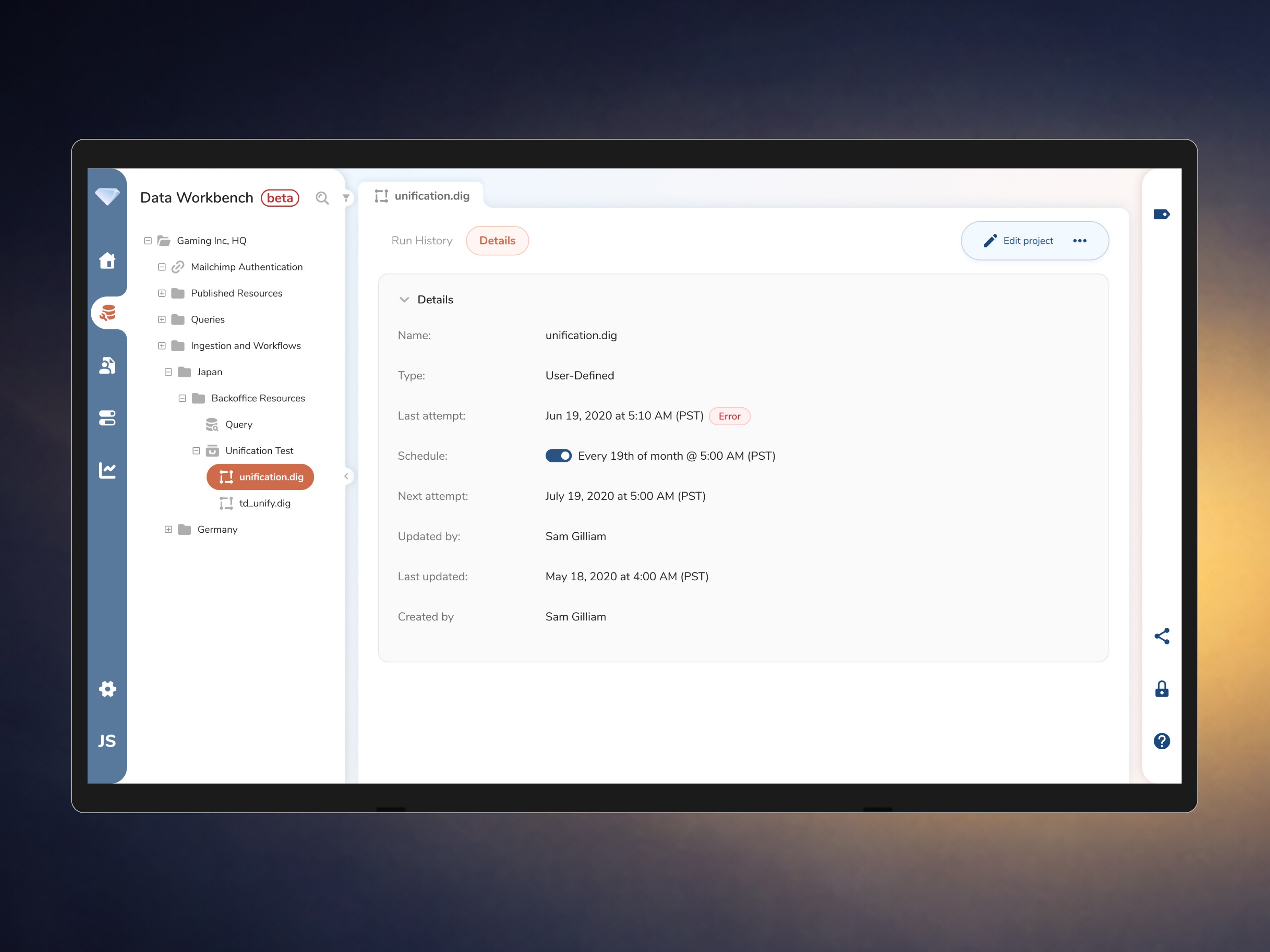
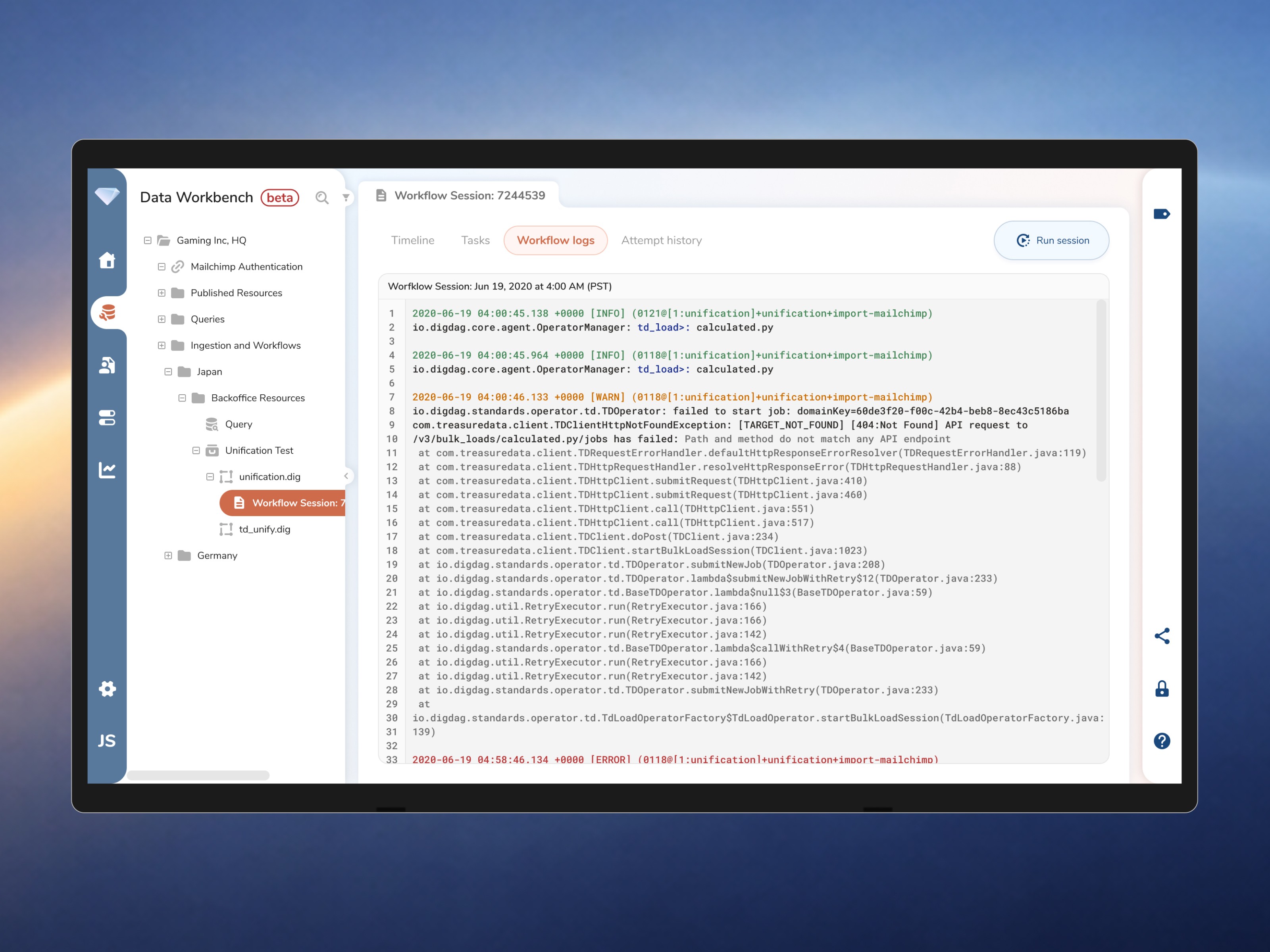
As Treasure Data expanded its CDP toward enterprise customers, clearer permission control and structural hierarchy became critical. The existing Workflow experience suffered from file structure ambiguity, execution confusion, and constrained editing space.
Within the platform’s new architectural direction and design system, I drove the redesign of the Workflow interface.
The Problem
The system’s conceptual model did not align with the user’s mental model.
Users struggled to distinguish between Projects, .dig files, and executable Workflows.
Permission governance was difficult to scale across hierarchical teams.
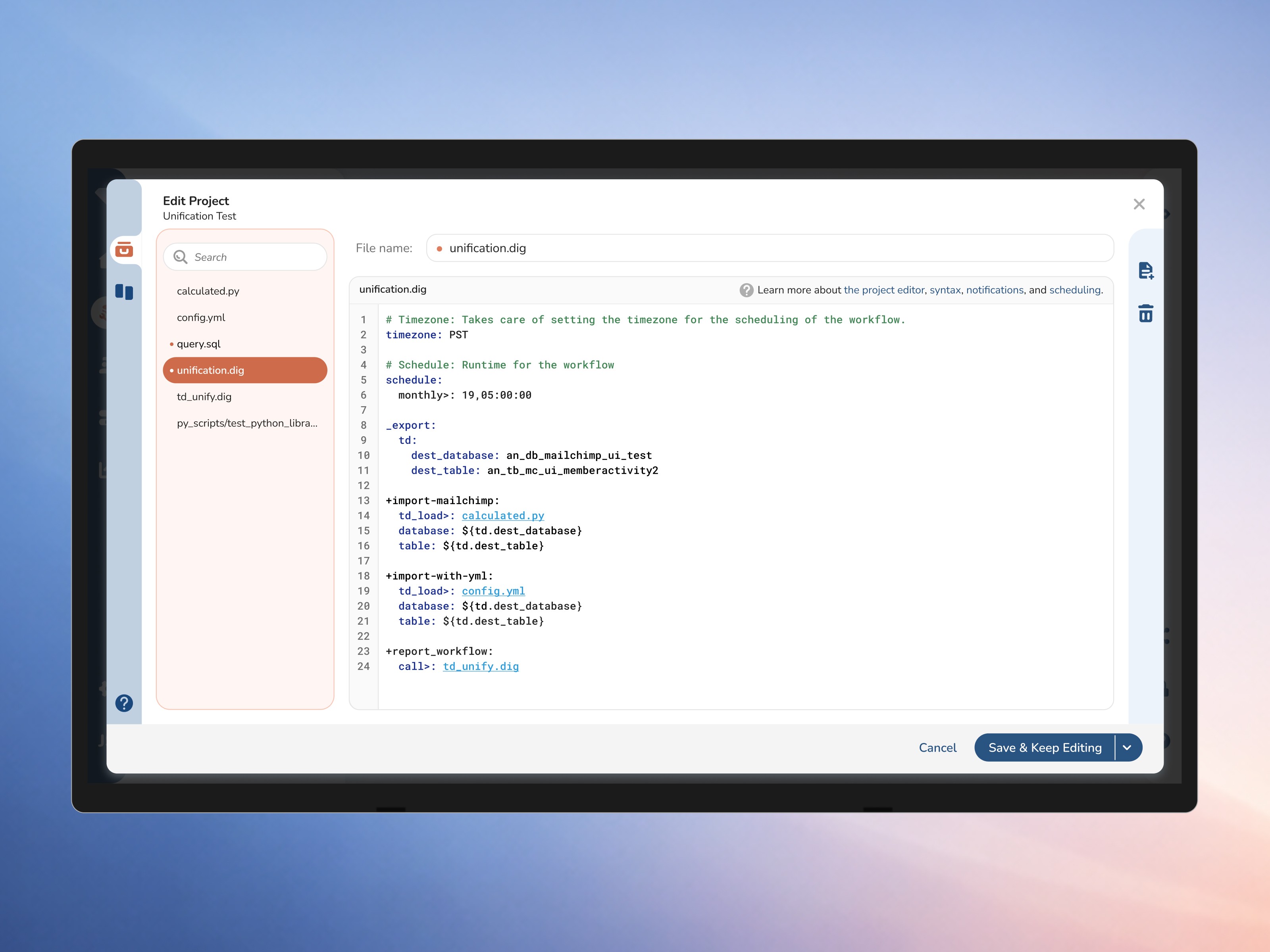
Developers edited code in spatially constrained interfaces that hindered productivity.
The result was structural friction in a data-processing environment meant for precision.
My Contribution
Working closely with engineers and senior designers, I:
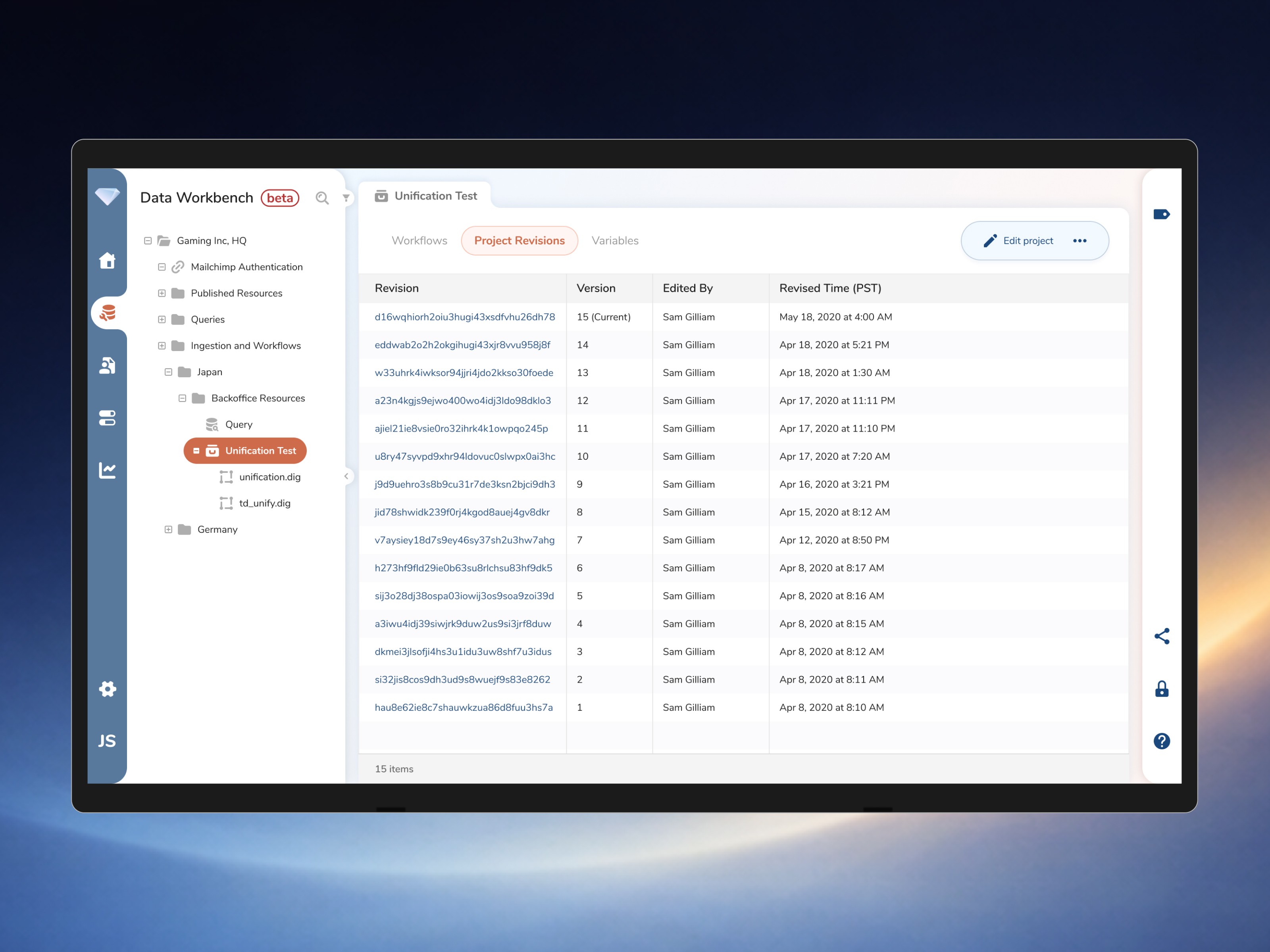
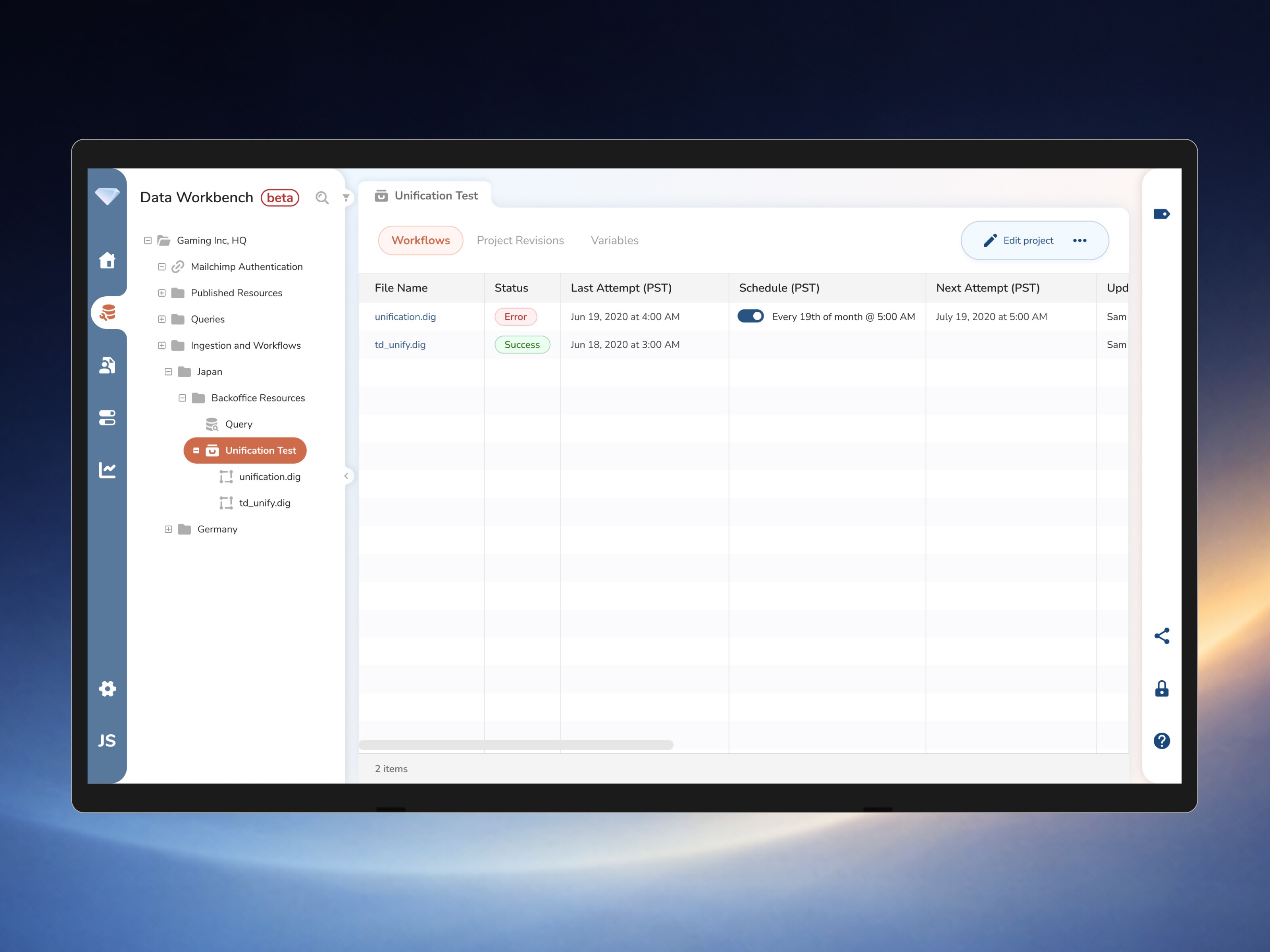
Translated execution logic (Project → .dig → Workflow) into a navigable information architecture.
Drove the Workflow UI restructuring within a tree-based hierarchy.
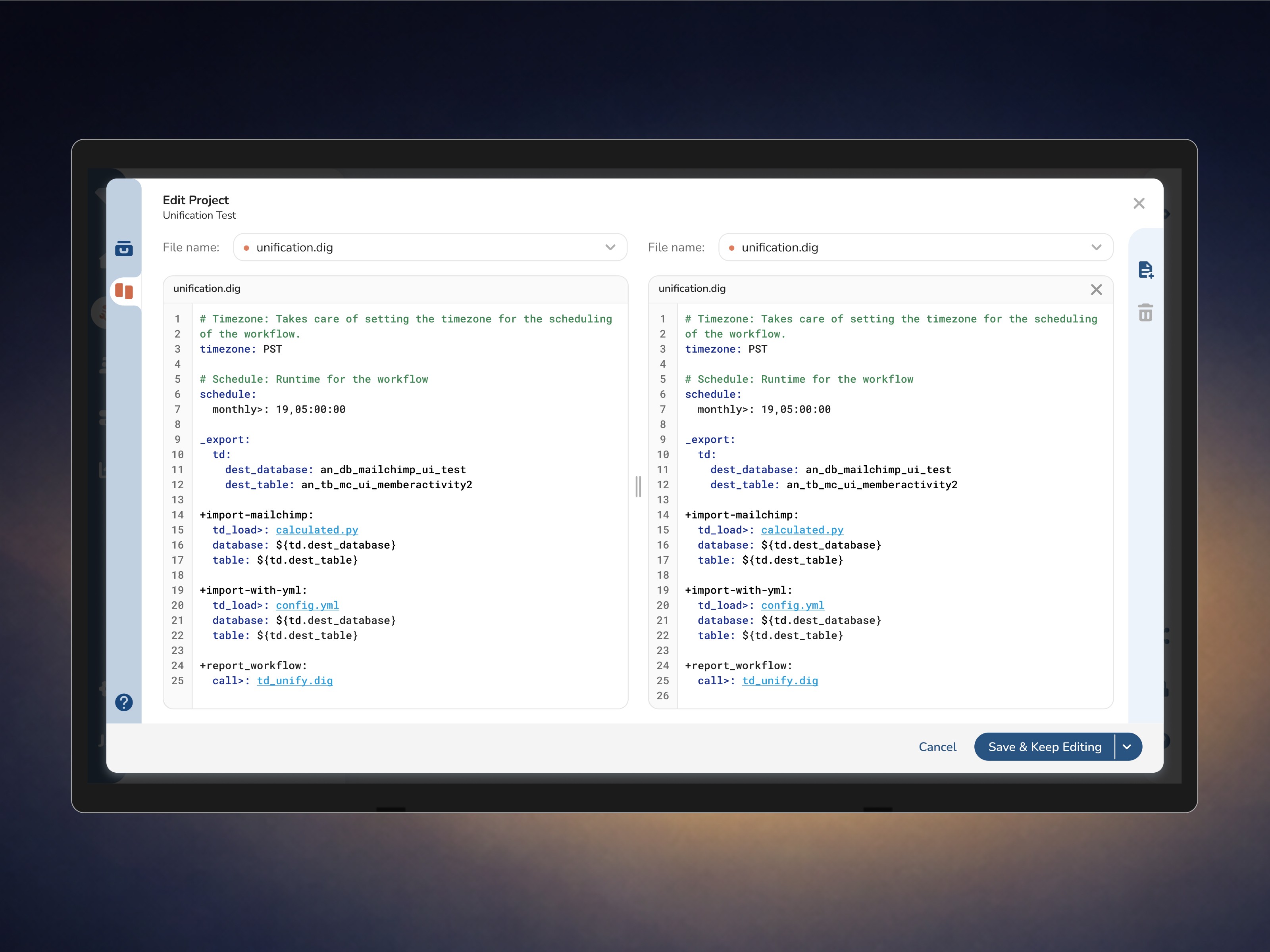
Designed a dual-file editing experience to reduce context switching.
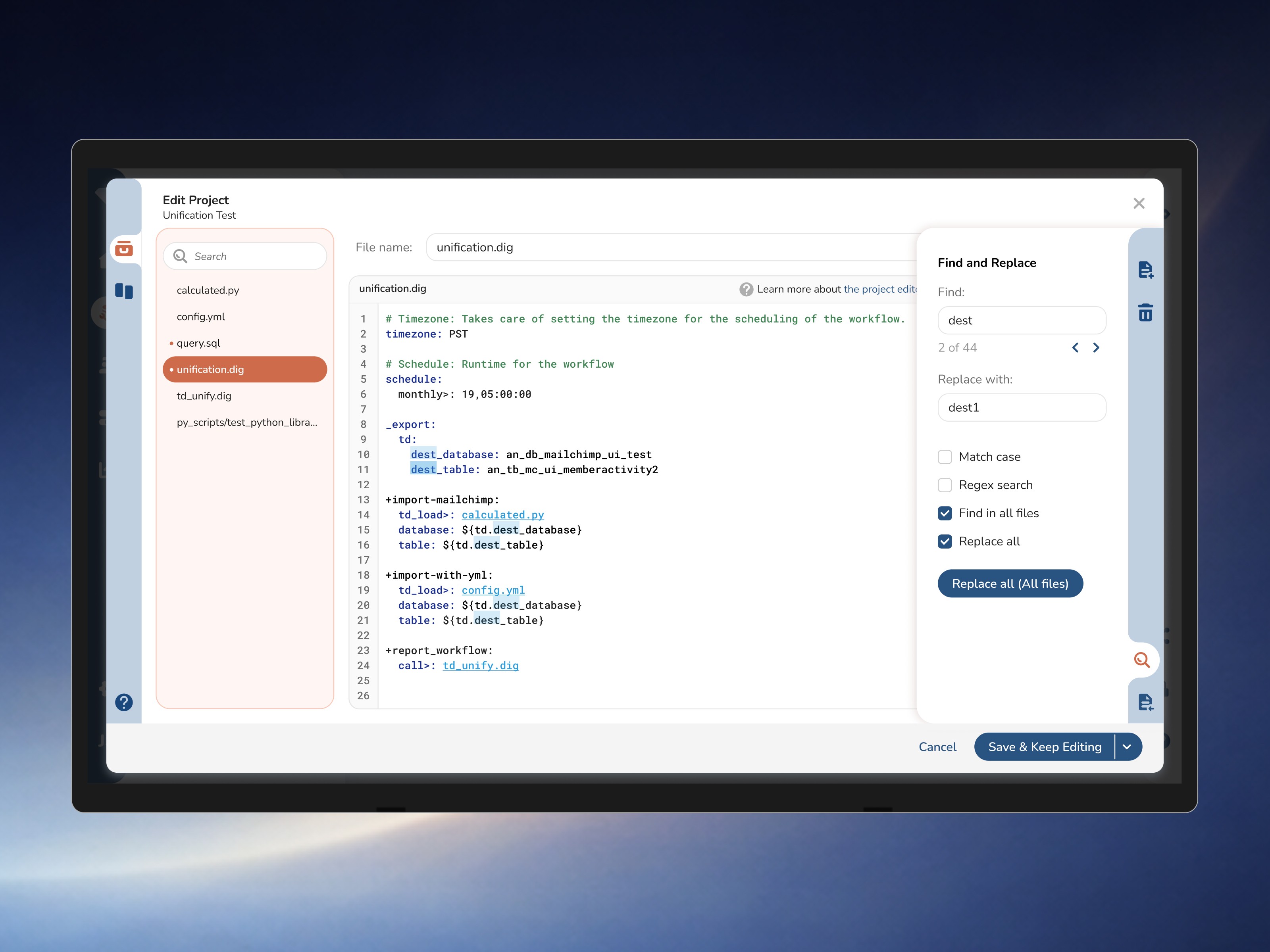
Produced high-fidelity interface systems aligned with the new design framework.
Proposed behavioral success signals (e.g., reduced reliance on search for file navigation).
My role focused on aligning system architecture with operational usability.
Outcome
The redesign clarified file hierarchy, reduced ambiguity in workflow execution, and established a scalable structure for permission-aware navigation within the platform.
Reflection
This project shaped how I approach system design:
clear conceptual models must map cleanly to user mental models.
That principle later informed my work designing identity and account systems at scale.
Prototype
A fully interactive high-fidelity prototype demonstrating the redesigned Workflow hierarchy, project structure, and dual-file editing experience.
→ [View interactive prototype]
Best experienced on desktop.